Agriculture
food safety problems and solutions
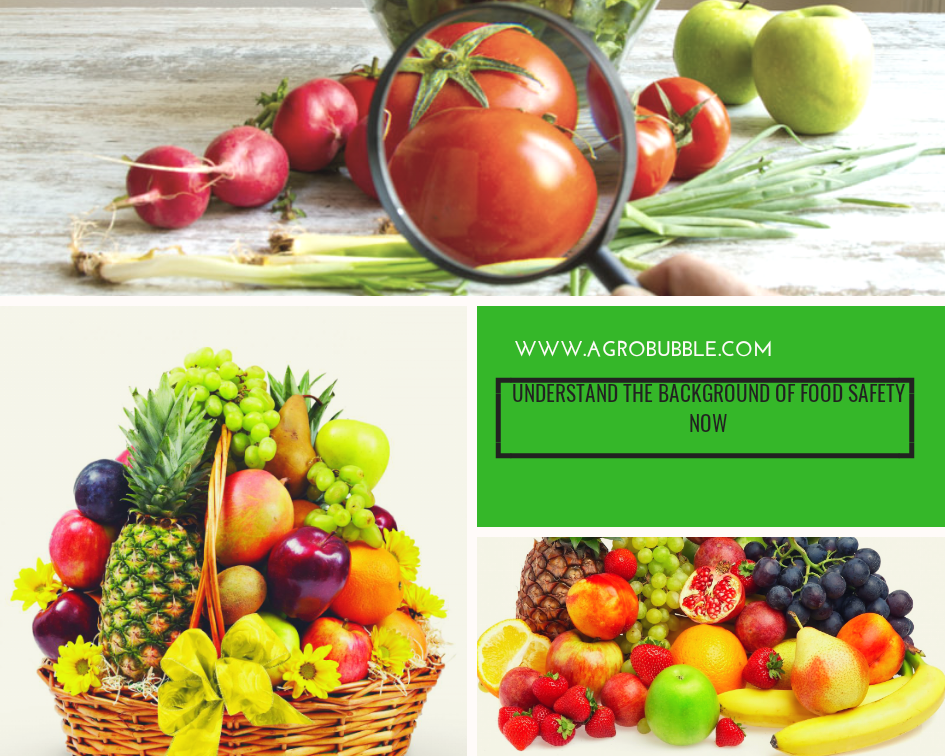
Food safety problems and solutions are a serious issue that need to be handled carefully. In today’s article, we will be looking at steps that we can follow to tackle this issue. Food Safety can be achieved in the following ways:- HAND WASHING AND CLEANING MAINTENANCE SHOULD BE PRACTICED TO AVOID FOOD SAFETY PROBLEM. […]
Food safety problems and solutions are a serious issue that need to be handled carefully. In today’s article, we will be looking at steps that we can follow to tackle this issue.
Food Safety can be achieved in the following ways:-
HAND WASHING AND CLEANING MAINTENANCE SHOULD BE PRACTICED TO AVOID FOOD SAFETY PROBLEM.
Bacteria can be spread throughout the kitchen and get onto hands, cutting boards, utensils, counter tops and foods. To ensure that your hands and surfaces are cleaned, make sure you:-
a. Wash your hands with warm water and soap for at least 20-30 seconds before and after handling food and after using the bathroom, changing diapers and handling pets.
b. Wash your cutting boards, dishes, utensils and counter tops with hot soapy water after preparing each food item and before you go on to the next food.
Read Also: Unconventional Knowledge About Millet That You Can’t Learn From Books
Consider using paper towels to clean up kitchen surfaces. At least, this will help to reduce the risk of food safety problems one might encounter. If you use cloth towels, wash them often in the hot cycle of your washing machine or with very hot water.
d. Rinse fresh fruits and vegetables under running tap water, including those with skins and rinds that are not eaten.
e. Rub firm-skin fruits and vegetables under running tap water or scrub with a clean vegetable brush while rinsing.
f. Clean lids of canned goods before opening it.
g. Use only sound and clean raw material and do use safe and clean water to prepare foods.
h. Prevent foods from being contaminated by pathogens coming from humans, pets or pests.
i. Package foods using appropriate containers and store them at the proper temperature.
j. Separate raw and cooked food to prevent contaminating the cooked foods.
2. Separate raw meat/fish/poultry from other foods.
Cross-contamination can occur when bacteria are spread from one food product to another.
This is especially common when handling raw meat, poultry, seafood and eggs. The key is to keep these foods and their juices away from ready to eat foods. To prevent cross- contamination, remember to:-
Separate raw meat, poultry, seafood and eggs from other foods in your grocery shopping cart, grocery bags, and in your refrigerator.
Use one cutting board for fresh produce and a separate one for raw meat, poultry and seafood.
Never place cooked food on a plate that previously held raw meat, poultry, seafood or eggs.
Don’t reuse marinades used on raw foods unless you boil them first.
3. In food safety problems its advice to cook at the temperature and time
Food is well cooked when it reaches a high enough internal temperature to kill the harmful organisms that cause harm to the body. To ensure that your foods are cooked well at all times:-
Use a food thermometer to measure the internal temperature of cooked foods. Check the internal temperature in many places to make sure the meat, poultry, seafood, eggs, or dishes containing eggs are cooked to safe minimum internal temperatures.
Cook ground meat or poultry until it reaches a safe internal temperature. Colour is not a reliable indicator of safe cooking.
Cook eggs until the yolk and white are firm. Only use formulas in which eggs are cooked or heated well.
When cooking in a microwave oven, cover, stir, and rotate for even cooking. If there is no turntable, rotate the dish by hand once or twice during cooking.
Always permit standing time, which finishes the cooking, before checking the internal temperature with a sustenance thermometer. Food is done when it achieves the sheltered least inward temperature. Bring sauces, soups and gravy to a boil when reheating.
4. Chill or Refrigerate food promptly.
Refrigerate food as quickly as possible because cold temperatures slow the growth of harmful bacteria. Cold air must circulate to help preserve food. Keeping a constant refrigerator temperature of 4°C or below is one of the most effective ways to reduce the risk of foodborne illnesses.
Check Out: 9 Simple Guide For You In Extension Approach
Use an appliance thermometer to be sure the temperature is constantly 4°C or below and the freezer temperature is 0°C or below. To Chill Food Properly:
Refrigerate or freeze meat, poultry eggs, seafood and other perishable foods within 2 hours of cooking or purchasing or within 1 hour if the temperature outside is above 30°C.
Never thaw food at room temperature, such as on the counter top. Food must be kept as a safe temperature during thawing.
There are three safe ways to defrost food: in the refrigerator, in cold water, and in the microwave. Food thawed in cold water or in the microwave should be cooked immediately.
Divide large amounts of leftovers into shallow containers for quicker cooling in the refrigerator. Use or discard refrigerated food on a regular basis.
NB: food safety problems and solutions is not an issue to be taken likely by anyone. There are times when one feels they are doing things the right way, but later find out they took things for granted.
Always treat with caution anything that pertains to food, to avoid food poisoning which is due to negligence on the food safety problem.
What are your suggestions? Please use the COMMENT section below.
Agriculture
Economic System: This Will Be A Thing Of The Past And Here’s Why.
Economic system is the relationship between the components of an economy, such as households, firms and government, and the institutional arrangements within which they operate. It governs the solving of economic problems of the society such as what to produce, how to produce, for whom to produce and resources to employ.
There are three basic economic systems in the world. These are capitalism, socialism and a mixed economy.
Economic System: Capitalism or free market economy
This is an economic system characterized by private ownership of means of production and distribution and their operation for profit under competitive conditions.
See Also: Dangers of Cassava: The Way Forward
It can also be defined as the one in which the means of production and distribution are owned and controlled by private individuals. In this kind of economy the market is free from government control.
Features of capitalism
Consumer sovereignty: Consumer sovereignty means that consumers are the king. In a capitalist economy, the needs and wishes of the consumers determine what, how and for whom to produce.
Private ownership of means of production: The means of production and distribution are owned and controlled by private individuals.
Existence of competition: In a market economy there is competition among the various economic units.
Profit maximization motive: The major aim of owning means of production is to maximize profit.
Freedom of choice: Consumers in this economy are free to choose from a wide range of goods and services.
Operation of price system.
Economic individualism.
Efficient allocation of resources.
Self interest.
There is class conflict.
Minimum government influence.
Development of individuals’ initiative.
Advantages of capitalism
1) Efficient allocation of resources.
2) Increased efficiency of production.
3) Freedom of choice.
4) Self regulating.
5) profit maximization.
6) Encourages competition.
7) Freedom of private ownership of properties.
8) Technological advancement.
9) Economic growth and development.
10) High standard of living.
Disadvantages of capitalism
1) Exploitation of consumers.
2) Lead to wastage.
3) Unhealthy rivalry and competition.
4) It creates a disparity of income and wealth.
5) The price system may fail to allocate resources efficiently.
6) May lead to monopoly.
7) Problem of profit maximization.
8) High levels of unemployment.
9) May not be able to provide certain services.
Socialism
This is an economic system in which the means of production and distribution are owned and controlled by the government. It is a centrally planned system in which all productive resources are owned by the government.
Under this system, allocation of resources and distribution of goods and services are left in the hands of the central authority.The central authority ascertains the needs of the people in order to match it with the available resources.
Features of socialism
State ownership of means of production: Ownership and control of industries, resources and means of production and distribution are vested in the hands of the government.
Promotion of social welfare: It is a system characterized by maximization of social welfare .The major aim of production is to maximize public welfare.
Centrally planned economy: The economic system is under the control of central authority.
Absence of price mechanism: Prices and allocation of resources are not determined by supply and demand.
Read Also: Water Pollution: Doubts You Should Clarify
Collective decision making: Decisions on what to produce, how to produce and for whom to produce are taken jointly by the people.
Absence of competition: In this type of economic system, economic rivalry associated with capitalism is non-existent.
There is a complete absence of economic rivalry and competition which is peculiar to free market economies.
Absence of profit motive.
Equitable distribution of income
Advantages of socialism
1) Employment opportunities: There is full employment in the economy. A considerable size of the working population is employed by the central authority.
2) Consumers are not exploited: Here, consumers are not exploited by business people who are after profit. Goods and services are produced and distributed by the central authority.
3) No economic rivalry: There is a lack of economic rivalry and competition in this system.
Means of production are not in the hands of private individuals who compete with each other.
4) Equitable distribution of income: Incomes are equitable or fairly distributed among the people based on their needs or wants. There is equality in income distribution.
5) Job security: The interest of labour is protected in this kind of system. Jobs are secured, therefore, unemployment is minimal.
6) Promotion of social welfare: Goods and services are provided purposely to promote the economic and social welfare of the citizens. Socialism caters for the welfare of the workers.
7) Growth of private monopoly is checked.
8) No overproduction of goods.
9) Equitable allocation of resources.
10) Centrally planned economy.
Disadvantages of socialism
1) Growth of state monopoly: It has been ascertained that the means of production and distribution are in the hands of the central authorities. Organizations owned by the government may exhibit monopolist tendencies.
2) Absence of competition: Healthy competition breeds efficiency. Here, there are no private individuals engaging in production and distribution.
3) Loss of consumer sovereignty: In a socialist economy, consumers are not consulted before production.Their needs and preferences are not taken into consideration unlike in a capitalist economy.
4) Economy is not self-regulating and functioning: The price system which regulates the economy by the interplay of forces of demand and supply is not allowed to operate.
5) It suppresses individual initiatives: Individual initiatives are suppressed. The entire populace depends solely on the government for the totality of their needs and wants.
6) Lack of innovations and inventions.
7) Bureaucracy and red-tapism.
8) Slows down economic development.
9) Absence of consumer choice and satisfaction.
10) Reduces productivity.
Mixed economy
This is an economic system in which the means of production and distribution are in the hands of both private and public sectors. It is a combination of state and private enterprises.
Mixed economy is a complex system which combines the features of capitalism and socialism. Moreover, it can also be defined as a system in which questions about what to produce, how much to produce and for whom to produce are decided jointly by the free market and the states.
Features of mixed economy
1) Joint ownership of means of production.
2) Joint decision.
3) Freedom of choice.
4) Freedom and production, distribution and consumption.
5) Government intervenes to regulate prices.
6) Profit motive.
7) Presence of competition
Advantages of mixed economy
1) Distribution of wealth.
2) Encourages economic competition.
3) Encourages growth and development.
4) Freedom of choice.
5) Provision of welfare services.
6) Prevention of monopoly.
7) Encourages development of private initiative.
8) It combines capitalism and socialism.
Disadvantages of mixed economy
1) Lack of efficiency.
2) Corruption and mismanagement.
3) Inequality of wealth.
4) Leads to waste of resources.
5) Exploitation of labour.
6) Conflicts of interest.
7) Emphasis is on profit.
8) Existence of bureaucracy.
Please use the COMMENT section below to share your own view.
Agriculture
Theory of Unemployment: Small But Important Things To Observe.
Overview of the Theory of Unemployment
Theory of unemployment states and implies an excess of supply of labour over demand for labour at the prevailing wage rate which can be described as a type of static imbalance in the labour market.
Unemployment can be defined or explained as a situation in which people that are able and willing to work and search could not get.
Read Also: Economic System: This Will Be A Thing Of The Past And Here’s Why
Unemployment can also be defined in terms of the inability of a large number of persons, who actively desire to be employed at the going wage rate but cannot get.
An economist named G.Reynolds defined the theory of unemployment as the difference between the amount of labour offered at present wage levels, working conditions and the amount of labour hired at those levels.
Unemployment poses a great problem to the economy of a country in terms of resources or welfare cost, apart from its potential as a source of political and social instability.
There are various types of unemployment, they include :
Structural unemployment: This is a long run unemployment which occurs as a result of structural or fundamental changes in the economy that prevents people from getting jobs because of their lack of training or geographical location.
Cyclical unemployment: This is a type of unemployment associated with the recession phase of business cycles because of insufficient aggregate demand.
Frictional unemployment: This is a type of unemployment of short term nature which is due to frictions in the economic system resulting from inefficient labour mobility and imperfect knowledge of job opportunities.
Technological unemployment: This is a type of unemployment which results when industries introduce capital intensive techniques of production.
Seasonal unemployment: It occurs when some people are unemployed during a particular year. It is unemployment which is due to seasonal variation.
Search unemployment: This occurs when people who could not find work to which they are fit but remain unemployed in order to search for a better offer than they have so far received.
Disguised unemployment.
Residual unemployment.
Voluntary unemployment.
There are several causes of unemployment. They are enlisted below :
Lack of infrastructural facilities: Poor infrastructural facilities such as irregular supply of electricity, bad roads, e.t.c discourages local and foreign investment.
Lack of industrialization: The level of industrialization is low in Africa. Presently the number of industries are reducing by the day because they cannot cope with the cost of factors of input.
High cost of education: The cost of education is very high thereby many youths do not go to school beyond elementary level.
Low level of direct investment: The levels of corruption and high crime rate have hindered the flow of foreign capital therefore the level of unemployment is high.
Urbanization.
Geographical immobility of labour.
Lack of adequate skill.
Defective educational system.
Overpopulation.
Government wage policy.
The following are some of the consequences of unemployment
Leads to crime and violence.
Leads to starvation.
Political and social instability.
Reduction in investment.
High rate dependency.
Stagnation of the economy.
Wastage of human resources.
Possibility of graduates embarking on menial jobs.
Loss of professionals and skilled workers.
Unemployment can be controlled by the following policy measures :
Industrialization.
Introduction of agricultural policy.
Establishment of the directorate of employment.
Provision of social amenities.
Educational policies.
Population policies.
Rural transformation program.
Manpower planning.
Incentives to potential investors.
Here are some factors which may influence the level of employment in an under developing or in developing countries like Nigeria :
See Also: Environment: Its types, Components, Domains and importance
Official age of retirement.
Government wages policy.
Activities of trade unions.
Level of investment expenditure.
Availability of finances.
Effect of weather.
The number of entrepreneurs.
Unemployment has many terms but here are some of the most used ones associated with underemployment. They are :
Underemployment: This occurs when the productive capacity of labour is unsatisfied. Here employment is not used in their most efficient ways.
Full employment: This occurs when every worker available for employment has a job.
Rate of unemployment: This is the number of unemployment as a percentage of the number of labour force or working population.
Demographic unemployment.
Involuntary unemployment.
I hope you enjoyed reading through this article? For observations, suggestions and corrections use the COMMENT section below to state your views.
Agriculture
Concept of Money: Terrible Ways it Can Improve Your Business.
CONCEPT OF MONEY
Studying the Concept of Money should be a determining factor for anyone who want to have it. But I wonder who in this life will never want to make money instead remains broke. I have not seen except that person is lazy tho.
That not withstanding, money is any commodity that is generally or universally accepted in payment of foods and services or settlement of debt.
A man named professor coulborn defined money ” As the means of valuation and of payment as both the unit of account and the generally acceptable medium of exchange.” Also another man named sir John Hick defined money ” as what money does” .
It is generally acceptable as a medium of exchange and at the same time as a measure and store of value.
Before the word “money” came into existence there was a system of exchange called the “BARTER SYSTEM”.
Trade by barter as commonly known, or the barter system is a direct exchange of goods for some quantity of other good without the use of money. For transaction to take place, there must be double coincidence of wants e.g yam maybe exchanged for cassava.
A barter economy is an economy in which exchange of goods and services are done without the use of money . It is money less economy.
The barter system or economy has the following difficulties ;
- Double coincidence of wants : it can only function when there is double coincidence of wants I.e a person who wants to exchange his goods and services should find another person who is willing to buy his goods and services e.g a person who has a goat and needs a cassava must search for another person who has cassava and needs goat.
- Lack of common measure of value : There is lack of a common unit in which the value of goods and services could be measured e.g how many bags of salt will be exchanged for a goat.
- Indivisibility of certain goods : some goods are indivisible i.e they cannot be shared or divided equally. A problem will arise when the owner of a large indivisible goods want to exchange his goods for small items.
- Discourages instalmental payment : It’s very difficult to assess the value of commodities used in exchange. This prevents and discourages instalmental payment.
- Heaviness of goods : If the goods are very heavy and bulky, it will be difficult to move them around and thus will prevent meaningful exchange of goods and services from taking place.
Historical development of money
Before the development and creation of money, exchange was done on the basis of direct exchange of goods and services. The exchange of goods for another goods is known as trade by barter.
In order to overcome the problems of trade by barter, money was introduced as a medium of exchange.
The development of money has passed through many stages depending upon the progress of human civilization. The barter system gave way to commodity money like cows, arrows and cowries were used as medium of exchange.
As a result of inadequacies of commodity money and the spread of civilization, metallic money was introduced and people started using silver and copper. This was made into coins in order to ensure convenience in exchange.
The development of paper money started with gold Smiths who kept strong safes to store their gold. Whenever somebody keeps his gold with the Goldsmith’s he would be given receipt in return. Thus, this eventually led to the development of bank notes.
The final stage in the development of money is introduction of near money like bills of exchange and bonds. Recently, digital cash/money has been introduced. This is money converted into a digital form and transmitted over telecommunication media.
Looking at the concept of money, one will conclude that it has various forms, the following are written accordingly from the first to the last depending on the progress of human civilization :
- Commodity money
- Coins
- Bank notes
- Near money
- Legal tender
- Token money
- Flat money
- Fidiciary notes
- Deposit money
- Partial money.
Before money can be generally and universally appreciated, it must have the following qualities :
- Acceptability
- Portability
- Durability
- Divisibility
- Recognizability
- Scarcity
- Stability
- Storability
- Homigenity
- No intrinsic value
- Economical to produce and maintain.
There are several functios of money but here are some common ones in our economy and society :
- Medium of exchange
- Measure of value and unit of account
- Standard of deferred or postponed payment
- Store of value
- Transfer of value.
If you like this post, please share to your friends to educate them too. No knowledge is a waste irrespective of the person. If you have any question or contribution, kindly use the COMMENT section below.
Don’t forget to SUBSCRIBE to this blog for more of our latest post updates.
-
Agriculture34 minutes agoLearn How To Make More Money With Catfish Hatching.
-
Agriculture34 minutes agoConcept of Money: Terrible Ways it Can Improve Your Business.
-
Review34 minutes agoTeds Woodworking Review: 16,000 Woodworking Plans
-
Agriculture34 minutes agoCommunication in Nigeria: How it can affect Modern Businesses.
-
Agriculture34 minutes agoUnconventional Knowledge About Millet That You Can’t Learn From Books.
-
Agro Pursuit34 minutes agoNATIONAL LEGISLATIONS AND BODIES RESPONSIBLE FOR FOOD SAFETY STANDARDS IN NIGERIA
-
Agriculture34 minutes agoHOW TO MAKE MONEY FROM COCOA PRODUCTION
-
Agriculture34 minutes agoCowpea Production: Reasons Why Its Getting More Popular In The Past Decade